
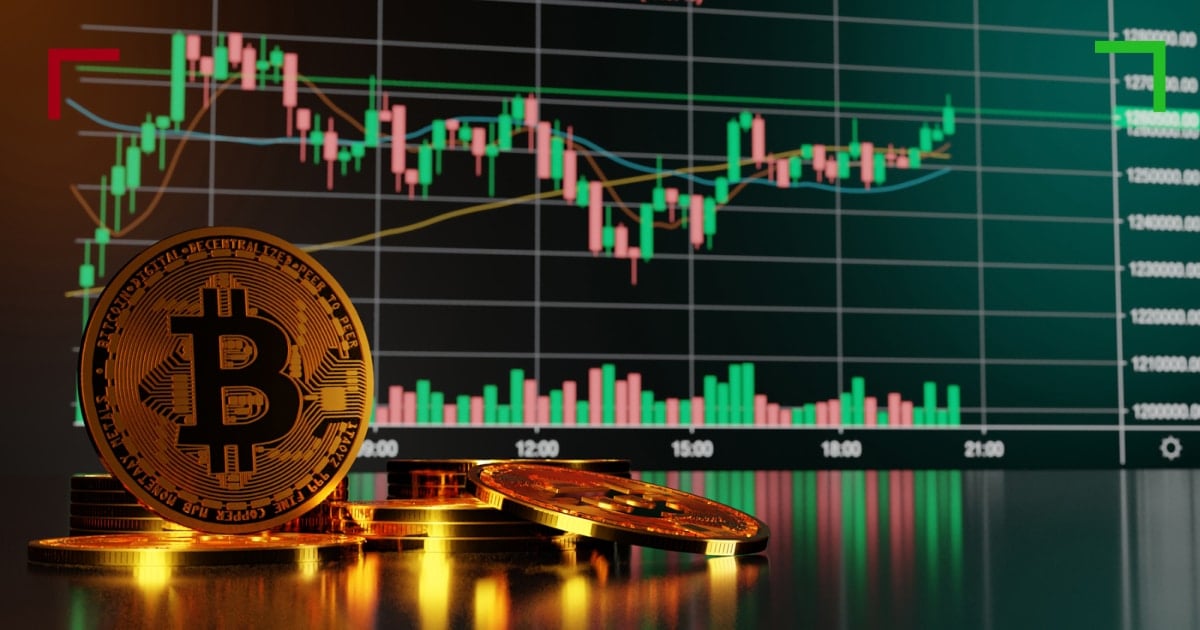
What Is Crypto Trading
1. Introduction to Crypto Trading
Crypto trading is the process of buying and selling digital currencies with the goal of generating profit from price movements. Instead of holding an asset for years, traders aim to capitalize on short-term fluctuations driven by market volume (traffic), liquidity, and momentum.
The cryptocurrency market has grown into a global financial ecosystem where millions of participants trade daily. Unlike traditional financial systems, crypto markets operate in a decentralized environment, meaning transactions occur across global exchanges without a central authority controlling them.
Some of the most popular cryptocurrencies traded today include:
- Bitcoin (BTC) – The first and largest cryptocurrency by market capitalization, often considered digital gold.
- Ethereum (ETH) – A leading blockchain platform powering decentralized applications and smart contracts.
These assets experience constant price movement, creating opportunities for traders who understand how to read market traffic, liquidity flow, and momentum strength.
Why Crypto Trading Is Different from Traditional Markets
Unlike stock markets that close after business hours, crypto markets operate 24/7, 365 days a year. This continuous trading environment offers:
- Non-stop opportunities
- Rapid price changes
- High volatility
- Global participation
Because there are no closing bells, market volume (traffic) shifts constantly across time zones. Traders who understand liquidity patterns and momentum cycles can position themselves strategically for better profit optimization.
Crypto Trading vs. Crypto Investing
Although often confused, trading and investing are fundamentally different approaches.
Investing (HODL Strategy)
- Long-term holding approach
- Focused on fundamental growth
- Less concern with short-term volatility
- Patience-based wealth accumulation
Investors may hold assets like Bitcoin or Ethereum for years, believing in long-term adoption and technological growth.
Trading
- Short-term to medium-term strategy
- Focused on price action and momentum
- Requires active market analysis
- Uses risk management and execution precision
Traders aim to profit from daily, weekly, or monthly price movements by analyzing:
- Market volume (traffic intensity)
- Liquidity zones
- Momentum shifts
- Strategic entry and exit timing
The Traffic Domination Approach
At Traffic Domination, crypto trading is not gambling — it is a structured system built on strategy, control, and profit optimization.
We focus on four core pillars:
1️⃣ Reading Market Volume (Traffic)
Market volume represents the flow of money entering and leaving a cryptocurrency. High volume confirms strong interest and validates price movement. Low volume can signal weak trends or potential reversals.
Traffic = Opportunity.
No traffic = No momentum.
Understanding volume helps traders avoid false breakouts and identify real trend strength.
2️⃣ Understanding Liquidity Zones
Liquidity refers to how easily an asset can be bought or sold without significantly affecting its price.
High-liquidity zones:
- Tighter spreads
- Faster order execution
- Lower slippage
Low-liquidity zones:
- Price manipulation risk
- Sudden volatility spikes
- Wider spreads
Successful traders operate where liquidity supports controlled execution and optimized profit potential.
3️⃣ Identifying Momentum Shifts
Momentum measures the strength behind a price move. When volume increases and liquidity aligns, strong trends form.
Momentum shifts often signal:
- Breakouts
- Trend reversals
- Acceleration phases
Dominating momentum means entering when strength builds and exiting before exhaustion appears.
4️⃣ Applying Strategic Profit Optimization
Trading without a strategy leads to emotional decisions. At Traffic Domination, we emphasize:
- Structured entry rules
- Risk-to-reward management
- Stop-loss control
- Capital preservation
- Consistent optimization
Strategy creates control.
Control protects capital.
Capital protection enables profit optimization.
The Foundation of Crypto Trading Success
Crypto trading is not about predicting the future perfectly. It’s about:
✔ Reading traffic (market volume)
✔ Understanding liquidity behavior
✔ Tracking momentum domination
✔ Executing with disciplined strategy
✔ Maintaining emotional and financial control
2. How Cryptocurrency Trading Works
Cryptocurrency trading takes place on digital platforms known as crypto exchanges. These exchanges act as marketplaces where buyers and sellers meet to trade digital assets in real time.
Some of the most popular global exchanges include:
- Binance – One of the largest exchanges by trading volume, offering hundreds of trading pairs and advanced tools.
- Coinbase – A beginner-friendly exchange known for security and regulatory compliance.
When you trade crypto, you are not “buying from the exchange.” Instead, you are buying from another market participant through the exchange’s matching system.
At Traffic Domination, we view exchanges as ecosystems where market traffic (volume), liquidity, and momentum interact continuously.
Understanding Trading Pairs
Cryptocurrency trading always happens in pairs.
What Is a Trading Pair?
A trading pair shows which two assets are being exchanged.
Example:
BTC/USDT
This means:
- You are trading Bitcoin (BTC)
- Against Tether (USDT)
If BTC/USDT is priced at 50,000:
- 1 Bitcoin = 50,000 USDT
When you buy BTC/USDT:
- You are buying Bitcoin
- You are selling USDT
When you sell BTC/USDT:
- You are selling Bitcoin
- You are receiving USDT
Understanding trading pairs is fundamental because every trade involves exchanging value, not simply buying an asset in isolation.
Order Types: How Trades Are Executed
To participate in crypto trading, you must place orders. There are two primary order types every beginner must understand.
1️⃣ Market Order (Instant Execution)
A market order buys or sells immediately at the best available price.
Advantages:
- Fast execution
- Ideal in high-volume markets
- Useful during strong momentum
Disadvantages:
- Possible slippage in low liquidity
- Less price control
Market orders are best used when traffic (volume) is strong, ensuring smooth and efficient execution.
2️⃣ Limit Order (Set Your Own Price)
A limit order allows you to choose the exact price at which you want to buy or sell.
Example:
- BTC is trading at 50,000 USDT
- You place a buy limit order at 48,000 USDT
- Your order executes only if price drops to 48,000
Advantages:
- Full price control
- Better risk management
- Supports strategic entry planning
Disadvantages:
- May not execute if price never reaches your level
At Traffic Domination, limit orders align with strategy and control, while market orders align with momentum domination when volume confirms strength.
The Order Book: Where Market Traffic Becomes Visible
The order book is one of the most important tools in crypto trading.
It displays:
- Buy orders (bids)
- Sell orders (asks)
- Order sizes
- Price levels
The order book shows real-time market traffic — this is where volume becomes visible.
What You See in the Order Book:
- Large buy walls → strong support
- Large sell walls → strong resistance
- Tight spreads → high liquidity
- Wide spreads → low liquidity
This is where smart traders observe how liquidity clusters around specific price zones.
Traffic = Volume
At Traffic Domination, we define Traffic as Market Volume.
Volume represents:
- The total amount of an asset traded in a given time
- The level of interest in the market
- The fuel behind price movement
Without volume, price moves lack strength.
What High Trading Volume Means
When volume is high:
✔ Strong liquidity
✔ Faster trade execution
✔ Lower slippage
✔ Clearer trend confirmation
✔ Stronger momentum potential
High traffic markets allow traders to:
- Enter efficiently
- Exit smoothly
- Scale positions confidently
Momentum thrives where volume supports it.
What Low Trading Volume Means
Low volume signals weak traffic.
This often leads to:
- Slow execution
- Higher spreads
- Unpredictable spikes
- Fake breakouts
- Weak trend follow-through
Low liquidity environments increase risk and reduce control — which directly impacts profit optimization.
At Traffic Domination, we avoid weak traffic zones because:
No volume = No reliable momentum
No liquidity = No strategic control
How It All Connects
Crypto trading works through:
- Exchanges matching buyers and sellers
- Trading pairs defining asset relationships
- Orders executing based on strategy
- Order books revealing market traffic
- Volume confirming liquidity and momentum
3. Types of Crypto Trading
Not all traders operate the same way. In crypto markets, domination depends on strategy, time horizon, risk tolerance, and control over capital.
At Traffic Domination, we believe different traders dominate in different ways — but all must understand market volume (traffic), liquidity zones, and momentum strength before choosing their style.
Here are the main types of crypto trading every beginner should understand:
1️⃣ Day Trading
Day trading involves opening and closing trades within the same day. No positions are held overnight.
How It Works:
- Traders analyze short-term charts (5-minute, 15-minute, 1-hour)
- They capitalize on intraday volatility
- Multiple trades may be taken in a single session
Key Characteristics:
✔ Fast decision-making
✔ Heavy focus on volume spikes
✔ Strong reliance on liquidity
✔ Strict stop-loss discipline
Day traders dominate through:
- Real-time traffic analysis
- Identifying momentum bursts
- Quick profit optimization
Because crypto markets operate 24/7, day traders often choose specific high-volume sessions when liquidity is strongest.
Best for: Traders who can monitor charts actively and maintain emotional control.
2️⃣ Swing Trading
Swing trading involves holding trades for several days or weeks to capture medium-term price moves.
Instead of reacting to small fluctuations, swing traders aim to capture larger “swings” in the market.
How It Works:
- Analyze 4-hour, daily, or weekly charts
- Identify trend direction
- Enter during pullbacks
- Exit near resistance or trend exhaustion
Why It Works:
Swing trading benefits from:
- Strong liquidity zones
- Clear momentum structure
- Confirmed volume trends
This style balances patience with opportunity and is often less stressful than day trading.
Best for: Beginners who cannot monitor markets all day but still want active trading exposure.
3️⃣ Scalping
Scalping focuses on making small, rapid profits from tiny price movements.
Scalpers may open and close trades within minutes — sometimes seconds.
How It Works:
- Use very low timeframes (1-minute, 3-minute charts)
- Target small percentage gains
- Repeat frequently
Critical Requirements:
✔ Extremely high market traffic (volume)
✔ Deep liquidity
✔ Tight spreads
✔ Fast execution
Scalping fails in low-volume environments. Without traffic, there is no momentum to capture.
Because profits per trade are small, discipline and risk control are essential.
Best for: Experienced traders who understand order books and execution speed.
4️⃣ Position Trading
Position trading is long-term trend-based trading.
This approach focuses on capturing major market cycles rather than short-term moves.
How It Works:
- Analyze weekly and monthly charts
- Identify macro trends
- Hold positions for months
- Ignore short-term noise
Position traders rely on:
- Strong fundamental outlook
- Long-term momentum dominance
- Capital preservation strategy
Unlike investors who simply “HODL,” position traders still use:
- Strategic entry timing
- Risk management
- Exit planning
Best for: Traders who prefer strategic patience and lower screen time.
5️⃣ Spot vs Futures Trading
Understanding the difference between spot and futures trading is essential before entering the market.
🔹 Spot Trading
Spot trading means you buy and own the actual cryptocurrency.
For example:
If you buy Bitcoin on the spot market:
- You own the asset
- You can hold, transfer, or sell it anytime
- There is no leverage involved
Advantages:
✔ Lower risk
✔ No liquidation risk
✔ Beginner-friendly
✔ Simpler execution
Spot trading emphasizes:
- Patience
- Capital protection
- Sustainable growth
🔹 Futures Trading
Futures trading involves trading contracts based on the price of an asset rather than owning the asset itself.
With futures, traders can:
- Use leverage (borrowed capital)
- Go long (profit from rising prices)
- Go short (profit from falling prices)
Leverage increases:
- Profit potential
- Risk exposure
In leveraged trading:
- Small price moves can generate large gains
- Small mistakes can lead to liquidation
Futures trading requires:
- Advanced risk management
- Strong emotional control
- Clear liquidity awareness
Why Beginners Should Start with Spot Trading
At Traffic Domination, strategy always comes before aggression.
Beginners should start with spot trading because:
✔ It builds foundational skills
✔ It teaches volume analysis
✔ It develops liquidity awareness
✔ It strengthens emotional discipline
✔ It reduces catastrophic risk
Once traders understand:
- Market traffic (volume)
- Liquidity structure
- Momentum behavior
- Risk control systems
Only then should they consider leveraged futures trading.
Choosing the Right Trading Style
Each trading type represents a different way to dominate the market:
- Day trading = intraday momentum domination
- Swing trading = structured trend capture
- Scalping = micro-traffic exploitation
- Position trading = macro momentum control
- Spot trading = foundation building
- Futures trading = advanced profit optimization
4. Step 1: Learn the Basics Before You Start
Before placing your first trade, you must understand the three core forces that move the crypto market:
- Market Volume (Traffic)
- Liquidity
- Momentum
At Traffic Domination, these are not just terms — they are the foundation of strategy, control, and profit optimization.
Jumping into crypto without understanding these elements is like driving at high speed without knowing how brakes work. Master the basics first, and domination becomes possible.
1️⃣ Market Volume (Traffic)
Market volume represents the total amount of an asset traded within a specific time period.
In simple terms:
Volume = Market Traffic
It shows how much interest and participation exists at a given price level.
Why Volume Matters
Volume confirms whether a price move is real or weak.
- When price rises with strong volume → Buyers are committed.
- When price rises with low volume → Move may be temporary.
- When price falls with strong volume → Sellers are dominant.
- When price falls with low volume → Weak selling pressure.
High Volume = Strong Moves
High volume means:
✔ Strong participation
✔ Greater conviction
✔ Reliable breakouts
✔ Higher probability momentum
This is where traffic fuels opportunity.
Low Volume = Weak Signals
Low volume often results in:
- Fake breakouts
- Slow price action
- Unpredictable spikes
- Poor execution quality
Low traffic markets lack energy. Without energy, there is no sustainable momentum.
At Traffic Domination, we trade where traffic exists — because volume validates movement.
2️⃣ Liquidity
Liquidity is the ease with which you can buy or sell an asset without significantly affecting its price.
In practical terms:
- High liquidity = smooth execution
- Low liquidity = price slippage and instability
Liquidity is what allows traders to maintain control.
High Liquidity Zones
Liquidity often concentrates in predictable areas:
🔹 Major Support and Resistance
These are price levels where buyers or sellers previously dominated.
Large orders tend to cluster here, creating liquidity pools.
🔹 Psychological Price Levels
Round numbers such as:
- $20,000
- $50,000
- $100,000
Traders naturally place orders around these levels, increasing liquidity.
When liquidity is high:
✔ Orders fill quickly
✔ Spreads remain tight
✔ Risk is easier to manage
When liquidity is low:
- Slippage increases
- Spreads widen
- Manipulation risk rises
Smart traders operate where liquidity provides execution stability.
3️⃣ Momentum
Momentum measures the speed and strength of price movement.
It answers the question:
“How fast is price moving, and how strong is the force behind it?”
Momentum is not just about direction — it is about intensity.
Strong Momentum Characteristics
✔ Large candles
✔ Consistent directional movement
✔ Volume expansion
✔ Breakouts with follow-through
Momentum shows dominance in the market — either buyers controlling price or sellers overpowering demand.
The Domination Formula
The true opportunity appears when all three elements align:
✅ Volume (Traffic) Expands
✅ Liquidity Supports Execution
✅ Momentum Accelerates
When this alignment happens:
→ Breakouts become stronger
→ Trends sustain longer
→ Profit potential increases
→ Risk becomes more measurable
This is what we call a Domination Opportunity.
Why Beginners Must Master This First
Before you:
- Choose a trading strategy
- Use leverage
- Risk capital
You must understand how traffic, liquidity, and momentum interact.
Because trading success is not about guessing direction.
It is about:
- Reading traffic
- Identifying liquidity zones
- Measuring momentum strength
- Executing with strategic control
5. Step 2: Choose a Reliable Crypto Exchange
After learning the basics of volume, liquidity, and momentum, the next step is choosing the right crypto exchange. Your exchange is your gateway to the market. If the foundation is weak, your strategy, control, and profit optimization will suffer.
At Traffic Domination, we treat exchange selection as a strategic decision — not just a convenience choice.
What to Look for in a Crypto Exchange
Not all exchanges are equal. Before creating an account, evaluate the following critical factors:
1️⃣ Strong Security
Security is non-negotiable.
A reliable exchange should offer:
- Two-Factor Authentication (2FA)
- Cold storage for funds
- Withdrawal confirmations
- Anti-phishing protection
- Strong encryption systems
Your capital is your trading weapon. Without security, there is no control.
2️⃣ Low Trading Fees
Every trade includes fees. If fees are too high, they reduce profit optimization.
Look for:
- Transparent fee structures
- Competitive maker and taker fees
- Discount options (e.g., holding exchange tokens)
- No hidden deposit/withdrawal charges
Even small fee differences matter over hundreds of trades.
3️⃣ High Liquidity (Very Important)
Liquidity is one of the most critical factors when choosing an exchange.
High-liquidity exchanges offer:
✔ Faster order execution
✔ Tighter spreads
✔ Lower slippage
✔ Stable price movement
Low-liquidity exchanges increase risk and reduce strategic precision.
Remember:
Liquidity allows control.
Control enables profit optimization.
4️⃣ Easy-to-Use Interface
Especially for beginners, a clean and intuitive interface matters.
A good exchange should provide:
- Simple navigation
- Clear charting tools
- Easy order placement
- Mobile compatibility
- Risk management features (stop-loss, take-profit)
Complex platforms can lead to execution mistakes.
Strategy works best when tools are simple and reliable.
5️⃣ Proper Regulations & Reputation
Regulatory compliance adds credibility and reduces counterparty risk.
Before choosing an exchange:
- Research its legal status
- Check its reputation
- Review user feedback
- Confirm operational transparency
Trust and stability are essential for long-term trading success.
Why High-Volume Exchanges Matter
Volume is traffic. Traffic creates opportunity.
Exchanges with high trading volume provide major advantages:
✅ Better Execution
Orders fill quickly at expected prices.
✅ Less Slippage
Your entry and exit points remain accurate.
✅ Stronger Momentum Setups
High-volume markets produce clearer trends and cleaner breakouts.
Momentum thrives where participation is strong.
Low-volume exchanges often produce:
- Erratic price movements
- Artificial spikes
- Weak breakout confirmations
This increases risk and reduces control.
Traffic Domination Rule
At Traffic Domination, we follow one core principle:
Never trade where there is no traffic.
If volume is low:
- Liquidity is weak.
- Momentum is unreliable.
- Execution becomes unstable.
Strong markets attract strong participation.
Before placing a trade, always ask:
- Is there enough volume?
- Is liquidity stable?
- Is momentum supported?
6. Step 3: Create and Secure Your Account
After choosing a reliable exchange, the next step is creating and protecting your trading account. Account security is not just a technical requirement — it is a core part of professional trading strategy.
At Traffic Domination, we believe that:
Security = Control
Control = Market Domination
Without security, profit optimization is impossible.
Many beginners focus only on profit, but experienced traders prioritize protecting their capital first.
Step 1: Register on the Exchange
Account registration is usually simple and requires basic personal information such as:
- Email address or phone number
- Password creation
- Basic identity details
When creating your account:
✔ Use a unique email dedicated to trading
✔ Avoid using public or shared devices
✔ Keep login credentials private
Your trading account is your financial gateway — treat it professionally.
Step 2: Complete KYC Verification
KYC (Know Your Customer) verification is required on most regulated exchanges.
The process may include:
- Uploading identification documents
- Face verification
- Address confirmation
Benefits of KYC verification:
✔ Higher withdrawal limits
✔ Full platform access
✔ Reduced fraud risk
✔ Better account recovery protection
Always ensure documents are clear and authentic.
Step 3: Enable Two-Factor Authentication (2FA)
Two-factor authentication is one of the most important security layers in crypto trading.
2FA adds an extra login verification step using:
- Authentication apps (recommended)
- SMS verification (less secure than apps)
Why 2FA matters:
- Even if someone steals your password, they cannot access your account easily.
- It significantly reduces hacking risk.
Professional traders never trade without 2FA protection.
Step 4: Use Strong Passwords
Your password should be difficult to guess.
A strong password should include:
- Uppercase letters
- Lowercase letters
- Numbers
- Special characters
- Minimum length of 12 characters
Avoid:
❌ Birthdates
❌ Simple words
❌ Repeated patterns
❌ Personal names
Consider using password managers to store credentials securely.
Step 5: Consider Hardware Wallets for Large Funds
If you plan to store significant capital, hardware wallets provide advanced protection.
Hardware wallets are physical devices that store private keys offline, making them resistant to online attacks.
They are especially useful for long-term holding or large portfolio storage.
The general rule is:
- Trading funds → Keep on exchange for execution
- Savings funds → Store in hardware wallet
This balance maintains both liquidity and security.
Security = Control
In trading psychology and execution strategy, security directly influences performance.
When your account is secure:
✔ You trade with confidence
✔ You avoid panic risk
✔ You maintain capital stability
✔ You focus on strategy instead of fear
Control = Domination
Control means managing:
- Risk exposure
- Entry timing
- Capital allocation
- Emotional discipline
Market domination is not about aggressive trading.
It is about consistent execution inside a protected system.
Final Rule: Protect Before You Grow
Professional traders follow this hierarchy:
- Security first
- Strategy second
- Execution third
- Profit optimization last
7. Step 4: Deposit Funds & Manage Capital
After securing your account, the next step is funding your trading capital. Depositing funds correctly and managing risk exposure is one of the most important skills in professional trading.
At Traffic Domination, the philosophy is simple:
Protect capital first → Optimize profits second → Scale gradually
Capital preservation is not fear — it is strategic domination.
Types of Funds You Can Deposit
Most crypto exchanges support two main types of deposits.
🔹 Fiat Currency Deposit
Fiat money is traditional government-issued currency such as:
- USD (US Dollar)
- EUR (Euro)
- Local currencies depending on region
Fiat deposits are usually made through:
- Bank transfer
- Debit/credit card
- Payment gateways
Fiat funding is beginner-friendly and helps new traders enter the market smoothly.
🔹 Cryptocurrency Deposit
You can also deposit existing cryptocurrencies into your exchange wallet.
Common cryptocurrencies include:
- Bitcoin (BTC)
- Ethereum (ETH)
- Tether (USDT)
Among beginners, USDT is widely used because it is a stablecoin designed to maintain value relative to the US dollar.
Cryptocurrency deposits are usually faster than fiat transfers but require careful address verification.
Always double-check wallet addresses before sending funds.
Capital Management Strategy (Very Important)
Trading success is not determined by how much you earn in one trade — it is determined by how well you protect your capital over time.
The golden rule for beginners:
👉 Never risk more than 1–3% of total capital per trade.
Example:
If your trading capital is $1000:
- Risk per trade should be between $10 and $30.
This strategy ensures:
- Long-term sustainability
- Reduced emotional pressure
- Lower liquidation risk
- Stable growth curve
Professional traders focus on consistency rather than aggressive wins.
Traffic Domination Principle
1️⃣ Protect Capital First
Your trading account is your business asset.
Protection methods include:
- Stop-loss placement
- Position size control
- Avoiding low-volume markets
- Trading only high liquidity zones
Never trade simply because price is moving.
Trade when market structure supports your strategy.
2️⃣ Optimize Profits Second
Profit optimization means maximizing return while minimizing risk.
Use:
- Proper entry timing
- Momentum confirmation
- Volume analysis (traffic strength)
- Liquidity zone awareness
Remember:
Profit is a result of structure, not emotion.
3️⃣ Scale Gradually
Do not increase position size suddenly.
Follow a growth model:
- Start small
- Prove strategy consistency
- Increase exposure slowly
- Monitor performance metrics
Scaling without discipline can destroy accounts even after early success.
Capital Preservation Is Strategic Domination
In crypto trading, survival is more important than winning a single trade.
Markets are unpredictable, but strategy creates structure.
Traders who survive long enough eventually dominate because:
✔ They avoid unnecessary risk
✔ They trade only high-quality setups
✔ They respect volume, liquidity, and momentum signals
✔ They focus on long-term performance
Final Trading Mindset
Always ask before depositing or trading:
- Is my capital protected?
- Is traffic (volume) sufficient?
- Is liquidity stable?
- Is momentum confirmed?
- Is my risk controlled?
8. Step 5: Make Your First Trade (Beginner Walkthrough)
Making your first trade is an important milestone in your crypto journey. However, beginners should avoid rushing into random trades. Successful trading is not about action — it is about structured execution.
At Traffic Domination, the first trade is always based on traffic (volume), liquidity, and momentum confirmation.
Follow a simple and safe beginner walkthrough.
Step-by-Step Beginner Trading Process
1️⃣ Choose a High-Volume Coin
Start with widely traded and highly liquid cryptocurrencies such as Bitcoin or Ethereum.
Why high-volume coins?
✔ Stronger price structure
✔ Better liquidity
✔ Lower slippage risk
✔ More reliable technical signals
High-volume markets represent strong market participation — which we call traffic strength.
2️⃣ Check the Overall Market Trend
Before entering any trade, determine market direction.
Ask these questions:
- Is the market trending up or down?
- Is momentum increasing or weakening?
- Is volume supporting the trend?
Trading against the dominant trend is risky for beginners.
Trend-following strategies are easier to control and optimize.
3️⃣ Identify Support and Resistance
Support and resistance are key price structure levels.
- Support = price zone where buying pressure appears
- Resistance = price zone where selling pressure appears
Beginners should focus on:
- Buying near support during upward momentum
- Selling near resistance during upward movement exhaustion
These zones usually contain liquidity clusters.
4️⃣ Confirm With Volume Spike
Volume confirmation is essential.
Look for:
- Sudden increase in trading volume
- Strong candle movement
- Participation expansion
A breakout without volume confirmation may be a false signal.
Remember:
Traffic validates price movement.
No traffic = weak signal.
5️⃣ Enter the Trade
After confirming trend, structure, and volume:
- Place your order (market or limit)
- Follow your risk management rules
- Avoid emotional timing
Execution should always follow strategy — never impulse.
6️⃣ Set Stop-Loss
Stop-loss is your primary protection tool.
It helps:
- Limit potential losses
- Maintain capital stability
- Remove emotional pressure
Beginners should always define risk before entry.
A common guideline is risking only 1–3% of capital per trade.
7️⃣ Set Take-Profit Target
Take-profit ensures you secure gains.
Recommended beginner approach:
- Use risk-to-reward ratio such as 1:2 or 1:3
Example:
- If risk = $10
- Target profit = $20–$30
Profit optimization means letting winners run while protecting capital.
Example Trade Setup
A strong beginner setup contains three elements:
✅ Strong Volume Breakout
Price moves sharply with increased participation.
✅ High Liquidity Zone
Execution happens smoothly with minimal slippage.
✅ Momentum Confirmation
Trend strength supports continuation.
When these conditions appear together, opportunity probability increases.
Traffic + Liquidity + Momentum Domination
This is the core philosophy of Traffic Domination trading.
- Traffic (Volume) → Shows market interest
- Liquidity → Enables smooth execution
- Momentum → Provides directional strength
When all three align, market structure becomes predictable enough for strategic trading.
Beginner Trading Warning
Avoid:
❌ Trading low-volume coins
❌ Entering trades during random spikes
❌ Ignoring stop-loss protection
❌ Using high leverage early
❌ Emotional decision-making
Professional trading is patience-based.
Final Beginner Mindset
Your first trade is not about making maximum profit.
It is about learning execution discipline.
Focus on:
- Capital protection
- Volume confirmation
- Structural analysis
- Controlled entry
- Gradual growth
9. Step 6: Develop a Trading Strategy
A trading strategy is the foundation of professional crypto trading. Without a strategy, trading becomes emotional gambling rather than structured financial decision-making.
At Traffic Domination, we believe that:
Domination = Strategy + Discipline + Risk Control
A strong strategy removes uncertainty and helps traders execute with confidence.
Why Strategy Is Important
The cryptocurrency market is highly volatile and unpredictable.
Emotions such as:
- Fear
- Greed
- Excitement
- Panic
Can lead to poor trading decisions.
A strategy acts as a decision framework that guides traders when to enter, hold, or exit a trade.
Professional traders do not trade randomly — they follow structured rules.
Technical Analysis Tools
Technical analysis helps traders understand price behavior using historical data and chart patterns.
📈 Trend Lines
Trend lines help identify market direction.
- Uptrend → Higher highs and higher lows
- Downtrend → Lower highs and lower lows
Trend lines are useful for:
- Breakout detection
- Momentum tracking
- Market structure analysis
Trading with the trend is generally safer for beginners.
📊 Support and Resistance
Support and resistance levels represent psychological and liquidity zones.
- Support = buying interest area
- Resistance = selling pressure area
These zones are important because large market participants often place orders there.
Beginners should focus on high-probability setups near these levels.
📉 Moving Averages
Moving averages help smooth price fluctuations and identify trend direction.
Common types include:
- Short-term averages for momentum detection
- Long-term averages for trend confirmation
When shorter moving averages cross above longer ones, bullish momentum may be forming.
🔥 RSI and MACD Indicators
Relative Strength Index (RSI)
- Measures overbought or oversold conditions
- Helps identify potential reversals
Moving Average Convergence Divergence (MACD)
- Measures momentum strength
- Helps confirm trend continuation or reversal signals
These indicators are best used as confirmation tools, not standalone signals.
Risk Management (Most Important Part)
Risk management is the difference between amateur and professional trading.
🔹 Stop-Loss Placement
Stop-loss automatically closes a trade if price moves against you.
Benefits:
- Protects capital
- Reduces emotional pressure
- Prevents large losses
Stop-loss should be placed at logical technical levels, not randomly.
🔹 Risk-Reward Ratio
Beginners should follow a minimum 1:2 risk-reward ratio.
Example:
If risk per trade = $10
Potential profit target should be at least $20.
This ensures:
- Winning trades compensate for losing trades
- Long-term profitability remains possible
🔹 Position Sizing
Position size determines how much capital is used in a trade.
Guidelines:
- Beginners → Risk 1–3% per trade
- Intermediate traders → May adjust based on strategy performance
Never over-leverage early in your trading journey.
Emotional Control
Emotions are one of the biggest enemies in trading.
Two dangerous emotions are:
Fear
- Causes premature selling
- Leads to missed opportunities
Greed
- Encourages overtrading
- Causes late entries
- Increases risk exposure
Professional traders follow their strategy even when emotions suggest otherwise.
Domination Formula
Market domination is achieved through:
Strategy
Provides structure and direction.
Discipline
Ensures rules are followed consistently.
Risk Control
Protects capital during uncertainty.
When these three elements work together, trading becomes systematic rather than speculative.
Traffic Domination Philosophy
Trading success is not about predicting every price movement.
It is about operating inside environments where:
- Traffic (volume) is strong
- Liquidity supports execution
- Momentum confirms direction
- Risk is strictly controlled
Patience and discipline outperform impulsive trading.
Final Trading Mindset
Always remember:
✔ Plan your trade before entering
✔ Follow your strategy without emotion
✔ Protect capital first
✔ Optimize profit second
✔ Scale gradually
10. Risks, Mistakes & Final Tips for Beginners
Crypto trading is a high-opportunity but high-risk financial activity. Many beginners focus only on profit potential and ignore risk structure. Successful traders understand that survival in the market is more important than winning a single trade.
The cryptocurrency market is naturally volatile, which means price movements can be fast and unpredictable. For beginners, controlling risk is the primary path to long-term success.
Popular cryptocurrencies such as Bitcoin and Ethereum often show strong participation, but even these assets can experience sudden market fluctuations.
Major Risks in Crypto Trading
🔹 High Volatility
Crypto prices can change rapidly within minutes.
While volatility creates opportunity, it also increases risk exposure.
Beginners should avoid trading during:
- Sudden news events
- Low liquidity sessions
- Unconfirmed breakouts
Volatility must be traded with structure, not fear.
🔹 Emotional Decision-Making
Emotions are the biggest cause of trading failure.
Two dangerous psychological states are:
- Fear → Causes early exit from winning trades
- Greed → Causes late entry or overholding positions
Professional traders follow strategy rules even when emotions disagree.
🔹 Overtrading
Overtrading means placing too many trades without quality signals.
Problems caused by overtrading:
- Increased fees
- Higher emotional stress
- Lower accuracy rate
- Capital depletion risk
Quality setups are more important than trade quantity.
🔹 Using High Leverage Too Early
Leverage can multiply both profit and loss.
Beginners should avoid aggressive leverage because:
- Small price movements can trigger liquidation
- Risk management becomes harder
- Emotional pressure increases
Start with low or no leverage while learning market behavior.
Common Beginner Mistakes
❌ Ignoring Volume (Traffic)
Trading without volume confirmation is like driving without road visibility.
Volume validates price movement strength.
❌ Trading Low-Liquidity Coins
Low liquidity markets often have:
- Wider spreads
- Execution problems
- Manipulation risk
- Fake breakouts
Traffic Domination philosophy strongly discourages trading without market traffic.
❌ No Stop-Loss Protection
Not using stop-loss is one of the fastest ways to lose capital.
Stop-loss ensures:
- Losses remain controlled
- Emotional panic is reduced
- Portfolio survival is protected
❌ Chasing Pumps
Pump chasing occurs when traders buy after price has already risen sharply.
This is dangerous because:
- Momentum may be exhausted
- Reversal risk increases
- Entry quality becomes poor
Always wait for structure and confirmation.
Final Traffic Domination Advice
Follow these core rules:
✅ Follow volume (market traffic)
✅ Trade in liquidity zones
✅ Confirm momentum strength
✅ Protect capital first
✅ Optimize profit second
✅ Scale position size slowly
Never rush into the market.
Crypto trading is not gambling.
Success depends on understanding:
- Market traffic flow
- Liquidity structure
- Momentum behavior
- Strategic execution
- Risk management discipline
Conclusion
Cryptocurrency trading offers massive financial opportunity, but only for traders who approach the market with knowledge and discipline.
The most successful traders focus on five core pillars:
- Volume (Traffic)
- Liquidity
- Momentum
- Strategy
- Risk Control